

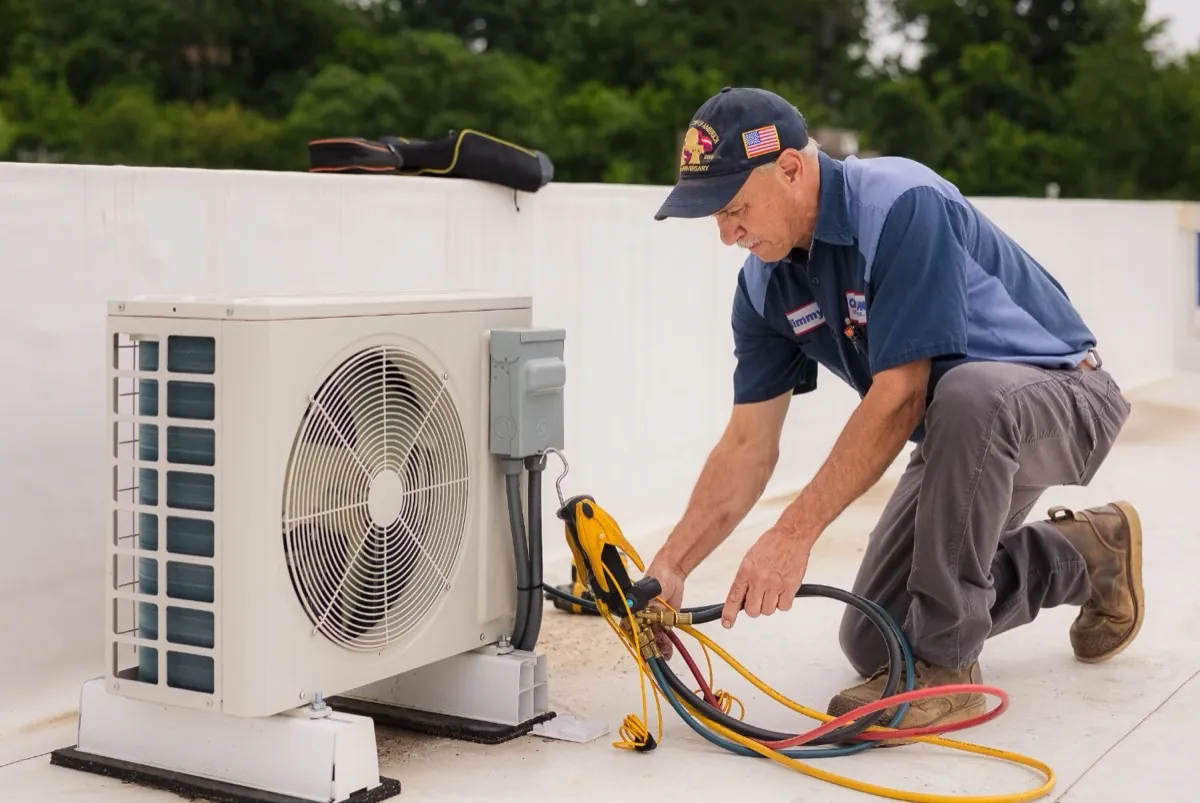
A heat pump is one system that both heats and cools by moving heat rather than generating it. In summer it pulls heat out of the house, which is exactly what an air conditioner does. In winter it runs the same cycle backwards, pulling heat out of the outdoor air, even cold outdoor air, and bringing it inside.
That last part is where homeowners in Staunton and Waynesboro get skeptical, and it is a fair place to be skeptical. Below is the honest version: where the efficiency actually comes from, what happens when it gets genuinely cold, and the situations where we would not recommend one.
Heat Pump or Furnace: How They Compare Here
| Consideration | Heat pump | Furnace plus separate AC |
|---|---|---|
| Equipment count | One outdoor unit covers the whole year | Two systems to buy, maintain, and eventually replace |
| How it makes heat | Moves existing heat, so output exceeds energy consumed | Burns fuel, so output is capped by what you burn |
| Performance in a Valley winter | Strong through most of the season, tapers in a hard cold snap | Consistent regardless of outdoor temperature |
| Very cold nights | Backup heat carries the load | No change |
| Fuel requirement | Electric only, no gas line or oil tank needed | Needs a gas line, propane, or oil delivery |
| Electrical demands | Correctly sized circuit, sometimes panel capacity | Lower, though the AC still needs its own circuit |
For a home in this climate without an existing gas line, that table usually resolves toward a heat pump. For a home with a healthy furnace and a good gas supply, it is a closer call.
Do Heat Pumps Actually Work in Virginia Winters?
Yes, and the reason is partly climate and partly that the technology moved.
Virginia winters are moderate compared with the northern states where heat pumps earned their old reputation. The Shenandoah Valley does get genuinely cold nights, but the bulk of the heating season sits in a range where a heat pump performs well. The reputation for being useless in winter largely dates from older equipment in colder places, and modern systems hold efficiency considerably further down the thermometer than their predecessors did.
What is true is that efficiency tapers as it gets colder. There is less heat available in the outdoor air at fifteen degrees than at forty-five, and no equipment escapes that. Which is why the backup matters.
Backup Heat: The Part That Gets Skipped
Most Valley homes run a heat pump with electric or gas backup heat for the coldest stretches, and that is the setup we most often recommend. The heat pump does the great majority of the season efficiently, and the backup covers the handful of nights it cannot carry alone.
Getting this wrong is the most common source of heat pump disappointment we see, and it usually shows up as a January electricity bill rather than as a comfort complaint. If the backup is set to engage far sooner than it needs to, the system spends the winter running expensive resistance heat while a perfectly capable heat pump sits idle beside it. The homeowner concludes heat pumps are expensive to run. What was actually expensive was the configuration.
This is a commissioning and controls question, not an equipment question, and it is worth asking any installer how they intend to set it.
The Efficiency Case, Honestly Stated
Because a heat pump moves heat instead of generating it, it can deliver more heating energy than the electrical energy it consumes. That is not a marketing claim, it is what a refrigeration cycle does, and it is why the efficiency comparison against resistance heat or combustion is not close for most of the season.
There is a second saving that gets less attention. One outdoor unit covers the entire year, so you maintain one system rather than a furnace and a separate air conditioner, and you replace one system rather than two on staggered schedules. Over the life of the equipment that is real money and real hassle avoided.
What Living With One Is Actually Like
Two things surprise people in their first winter with a heat pump, and neither is a fault.
The first is the air temperature at the vents. A furnace delivers short blasts of distinctly hot air. A heat pump delivers a longer, steadier flow of air that is warm rather than hot, often cooler than your skin temperature, so it can feel like a draft even while the room is holding temperature perfectly. The house ends up more evenly heated and with fewer swings, but it is a different sensation and worth expecting.
The second is the defrost cycle. On cold damp days frost forms on the outdoor coil, and the system periodically reverses briefly to melt it off. You may see steam rising off the outdoor unit and hear the sound change for a few minutes. Homeowners in Fishersville and Verona call us about this every winter convinced something is wrong. It is the system doing exactly what it should.
Maintenance is much the same as any forced-air system: change the filter on schedule, keep the outdoor unit clear of leaves, snow drifts, and shrubs, and do not stack anything against it. Because the outdoor unit now works year round rather than sitting idle all winter, keeping it clear matters more than it did with a separate air conditioner.
When We Would Not Recommend One
A recommendation means more with its limits attached.
- You have a recent, healthy furnace and a good gas supply. Replacing working equipment to chase efficiency rarely pays back. Add or replace the AC side and keep the furnace.
- The ductwork cannot support it. Heat pumps deliver air at a lower temperature than a furnace does, so they move more of it for longer. Undersized or leaking ducts that a furnace masked will be exposed immediately.
- The panel has no capacity and a panel upgrade is out of budget. A heat pump needs a correctly sized circuit. If your panel is full, that cost is part of the project and needs to be in the conversation from the start, not discovered later. Our guide on panel upgrades for a heat pump or EV charger covers how to tell.
- Nobody will do a load calculation. An oversized heat pump short-cycles, never dehumidifies properly in summer, and wears out early. If an installer will not measure, the equipment choice is not your problem.
The Install Is What Decides the Outcome
A heat pump is only as good as its installation, more so than most equipment, because it depends on airflow and controls being right rather than just brute heat output.
It has to be sized to the home's actual load, matched to ductwork that can carry the volume, wired on a correctly sized circuit, and commissioned with the backup heat set sensibly. Callison fabricates ductwork in our own Staunton shop, and because we hold Virginia Class A licenses in both HVAC and electrical, the panel and circuit work a heat pump needs is handled in the same project by the same company rather than subcontracted and coordinated between two.
Considering a heat pump this year? Ask the installer three things: will you perform a load calculation, have you assessed the ductwork, and how will you set the backup heat lockout. Those three answers predict your January bill better than the efficiency rating on the box does. See our heat pump page for what an install includes.